Can'tCan Not StopQuit MovingRelocating Fauntleroy and Lincoln Park Solutions
Can’t Stop Moving: Fauntleroy and Lincoln Park Solutions
Fauntleroy sits on the edge of West Seattle where tides, trees, and ferry horns set the rhythm. It looks easy on the map, just a few curving streets and a sweep of shoreline, but anyone who has moved a household in this pocket knows how quickly the environment asserts itself. The ferry queue loads the main corridor right when you want a clear lane. The hillside homes, many with narrow drives or alley access, challenge even experienced truck operators. Lincoln Park adds its own constraints with protected trees and tight residential parking around the perimeter paths. The winning approach blends the pace of the neighborhood with strict logistics.
I have walked gear down half-block stretches because a 26-foot truck could not clear a Douglas fir canopy without risking bark damage. I have pulled permits for single-day no-parking zones only to find an unexpected school fun run closing the cross street. None of that is unusual here. It is simply the reality of moving in Fauntleroy and around Lincoln Park. You plan for the knowns, leave margin for the unknowns, and respect the coastline as much as the clock.
Reading the ferry as part of your job site
Fauntleroy’s ferry terminal influences more than traffic. It dictates how crews stage equipment, when to arrive, and how to exit without burning an hour idling behind Bainbridge and Vashon riders. The queue on Fauntleroy Way SW grows and dissolves in waves that look like a heartbeat if you plot them. The worst period, in my experience, is the late afternoon cluster when return traffic stacks up and locals are trying to get home. That period changes a bit seasonally and with special events, but the shape holds.
On a complicated move near SW Wildwood Place, we split the day in two. The heavy furniture and largest crates went into a smaller box truck early, long before the queue built, and we used a second window close to dinner for the last trip. That move ended on time, with no overtime on the crew and no friction with neighbors. The timing strategy mattered more than raw horsepower.
Can’t Stop Moving on Fauntleroy slopes and park perimeters
Can’t Stop Moving has rolled into Fauntleroy often enough to keep a mental map of where standard playbooks fail. Long, steep grades conceal soft shoulders. Side streets run skinny, with parallel parking that leaves mirrors kissing. The houses closest to the park wear their tree canopy like a crown, which means a tall truck might fit on a dry day, then not fit the next week after a branch sags with rain.
We put a lot of emphasis on site walks. A 15-minute look at an approach road and a driveway tells you what you need to know about turning radius, slope, and the breakover angle that can put a tailboard into the asphalt. On a recent Lincoln Park move-in, we found a crowned alley with a mid-block hump. We insisted on a high-cube truck with a shorter wheelbase, added curb ramps to protect the apron, and staged furniture at the top of the slope so carriers weren’t taking 400-pound loads down a grade people sled on in winter. None of that shows up on a map.
Staging that matches the site, not the calendar
If you try to force a standard Saturday timeline on Fauntleroy, the neighborhood will push back. Saturdays around the park are busy with games, family meetups, and long dog walks. Parking fills in irregular patterns. Parents will leave their cars a half-foot from your cones if they spot a patch of shade. Rather than fight the tide, stage to match it. Early morning is your friend for load-out, and evenings work for last loads when the park quiets and the ferry line loosens.
For one waterfront condo near the ferry dock, we used a rolling staging plan. Soft goods and closet boxes were shuttled with dollies to a mid-block holding area, then loaded quickly when the truck slid in during a scheduled 40-minute opening. Heavy items were carried during a lull after the next ferry departure. It looked chaotic from the outside. Inside the plan, it worked because each segment used the few minutes the street gave us.
The park, the roots, and the drip line
Lincoln Park carries some of the best tree canopy in the city, and the drip line matters. If a branch leans, and a truck blazes under it just to shave a minute, you risk damaging a tree protected by city code and community attention. I have seen crews arrive with an 11-foot box and leave because they are an inch too tall at the highest point, which is often not the curb but mid-street due to crown.
We own oversized moving pads for the unusual reason of wrapping trunk sections and railings along narrow paths that snake around root zones. When hand carries are required, wide rolling carts with pneumatic tires distribute weight better across compacted soil or uneven pavers. The point is to keep pressure low and turn angles gentle so you are not grinding into roots or scraping the bark of a maple that predates your moving company by half a century. It’s slower, but it means neighbors wave with all five fingers.
Weather patterns that don’t read the forecast
Fauntleroy and the bluff above the ferry sit in a transitional microclimate. Marine air slides in quickly. Onshore breezes throw mist into a move that started sunny. Floors go from completely dry to slick in a few minutes. Anyone who has lost traction on sealed hardwood knows how fast that changes your day. The Science of Moving in Seattle’s Microclimate Zones is less meteorology and more muscle memory. If the wind turns in late morning, you lay down runners immediately, not after the first scuff.
I keep two versions of the same plan at hand: a dry plan with felt sliders and a wet plan with rubber-bottom dollies and extra floor protection. I’ve watched fog erase skyline views along Fauntleroy Way while we were on a second trip, which stretched drying time for freshly mopped floors from 10 minutes to 45. If you do not adapt, you risk moisture trapped under rug pads and finish damage on stair treads.
Routes that dodge choke points
West Seattle has taught us to ignore the shortest path on a GPS when the neighborhood is in play. Construction near 45th, utility crews, a school pickup wave, or a soccer tournament at nearby fields can add an hour without warning. The smarter approach builds three routes: primary, weather route, and ferry-queue route. We have seen a move saved by cutting up toward Gatewood, then dropping back toward the park through a quieter corridor while the direct line sat behind a temporary lane closure.
A case in point: a family relocating from Delridge to a classic 1920s home north of Lincoln Park. The main route was supposed to go straight down Fauntleroy Way, but a midday surge from a ferry offload made that a trap. We queued the alternate through Seaview and reached the site two minutes after the homeowners. They thought we had left early. We had left on time and chosen the route that didn’t look obvious on a phone.
Can’t Stop Moving and the puzzle of beachside access
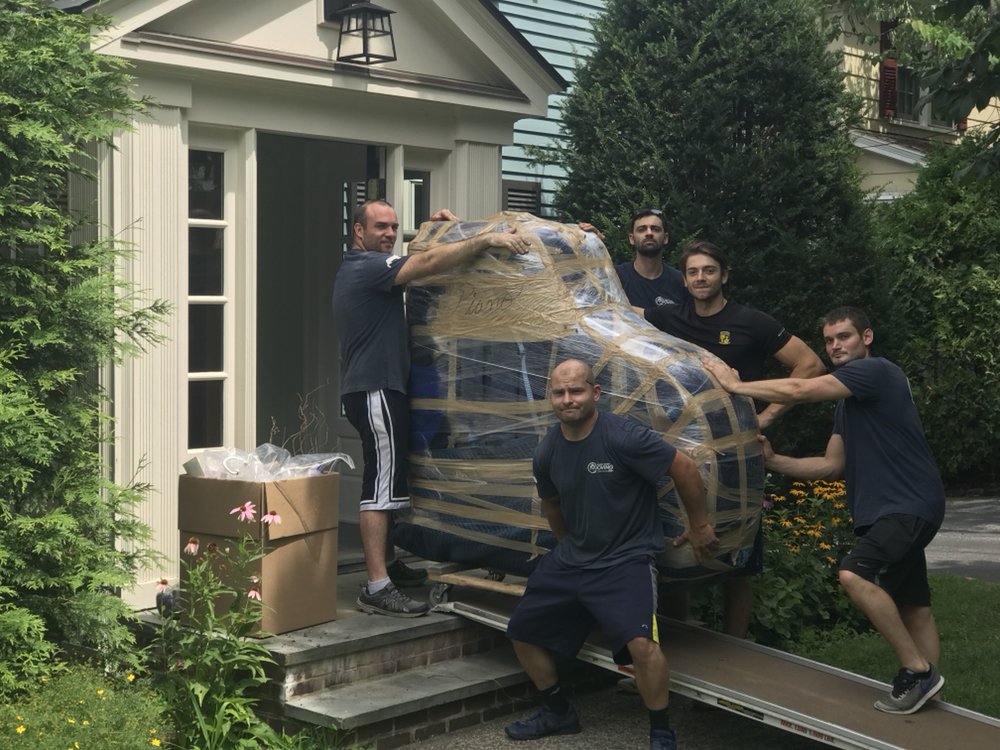
Some Fauntleroy addresses sit practically on the water. The views are stunning, and the access paths can be tight, tiered, or both. Stairs multiply. Guardrails take a beating if you are careless. In these scenarios, Can’t Stop Moving builds a stair team with a strict rotation. Four carriers take turns on the heavy lifts to keep legs fresh and hands steady. We also use high-grip gloves that can handle salt spray on banisters, which pool even when you cannot feel moisture in the air.

One project involved a mid-century place with a narrow interior stair whose landing was a hair shorter than the depth of a sleeper sofa. The only way to avoid wall damage was to remove the footings, wrap the frame tight, and run a micro-pivot that pulled a diagonal without scraping. The day would have fallen apart if anyone rushed. We slowed down and kept the cadence. Every move has a speed that fits the space, and here, that speed was measured rather than fast.
Parking control without making enemies
Posting a temporary no-parking zone is the easy part. Enforcing it within a community hub is delicate. Around Lincoln Park, many drivers assume cones are flexible invitations, not legal markers. We have better success when we talk to neighbors the night before, explain the hours, and offer to keep a path clear for quick in-and-out needs. On one block, a neighbor had a routine medical appointment. We adjusted the staging so she could pull out without threading a gauntlet. Those small decisions preserve goodwill, which is priceless when a last-minute visitor would otherwise park straight through your permits.
If you cannot get the frontage, you set a rolling load plan. Smaller loads, more trips, tighter timing. It increases foot miles, so you protect shoulders and backs with lightweight crate systems, two-wheeled stair climbers, and plenty of rest water on hand. Hydration matters more than it gets credited, especially on the park side where salty air and wind mask sweat loss.
Materials that respect salt air and water edges
Salt air is kinder to lungs than to hardware. Metals corrode faster near the waterline. That shows up in hardware on bed frames, appliance connectors, and the tiny fasteners in crib assemblies. We carry corrosion-resistant fastener kits for reassembly and a quick spray protectant that helps in damp conditions. For electronics coming out of beachside homes, anti-static bags and desiccant packs prevent the subtle moisture issues that can cause a home theater amp to act up two weeks later. The difference between a move that seems fine on day one and a move that avoids a callback often lies in those quiet materials.
I have also learned to label salt-exposed items with a small dot on the paperwork. If the item needs a wipe down with a mild, wood-safe cleaner before pad wrapping, the dot keeps it from being missed in the rush. Furniture finishes will thank you after a winter of marine air.
Coexisting with joggers, families, and dogs
Lincoln Park is not just trees and trails. It’s a steady stream of people. Morning joggers are predictable. The mid-day family clusters less so. Dogs add excitement at the exact moment you do not want it, which is when you are pivoting a glass-top table on a sidewalk pinch point. Good crews appoint a spotter with eyes ahead, not on the item. That spotter calls out approaching wheels, kids on scooters, and the occasional distracted phone walker. Think of it as a moving job with crowd control. You manage speed and space, or you risk an avoidable bump.
We once paused an entire load for a youth cross-country pack that came around the corner faster than we expected. That pause cost five minutes and prevented a lifetime of what-ifs. You will never regret a stop for safety in this neighborhood.
Matching tools to Fauntleroy’s edges
Every area shapes the tool kit. Here, I lean on:
- Low-profile piano boards with non-marring wheels for tight hallways.
- Rubber-backed runners that grip on moist decking.
- Telescoping ramps with side rails for uneven driveway lips.
- Compact four-wheel dollies that can hop curbs with a helper.
- Collapsible crates that hand-carry well on long paths.
That set has evolved after years of trial, error, and a few lessons learned the hard way. A runner that slips on damp Trex decking will ruin your day. A ramp without side rails on a crowned alley will test your balance. The right tools neutralize those edges.
The human side of stair jobs
Many Fauntleroy homes count stairs by the dozen. Stair jobs aren’t only about leg strength. They are about rhythm. You cue steps, align breath, and keep load angles consistent so the person on the low end does not carry more than their share. A good stair team sounds like a metronome. One, two. Turn. One, two. That steady pattern reduces drops and builds confidence. I have watched a nervous homeowner relax after the first piano flight because the crew moved like a single unit rather than a pack of individuals.
When a landing is small or a railing loose, we stop and stabilize. A ten-minute fix avoids a ten-thousand-dollar claim. Patience saves money.
What changes on rain-heavy days
The West Seattle rain can feel gentler than a downpour, then you notice the slick film on basement steps. On heavy rain days, every item passes a staging point under cover before it goes into the truck. That extra touchpoint allows a wipe-down and a re-check of pad coverage. Cardboard weakens faster than you expect. For heavier boxes, double-wall becomes mandatory. We keep spare lids and edge guards in case a box needs reinforcement mid-carry.
One detail worth noting: wet straps stretch. If you load with saturated webbing and don’t re-tension after the first ten minutes of driving, your tier can shift. It’s a small risk until it isn’t. We run a pull-and-check routine after the first block on rain days.
Neighbors, permits, and the choreography of a short block
Short blocks near the park can feel like living rooms. Everyone knows the schedule, where kids nap, which driveways need clear access for caregivers, and where the slope turns icy first in winter. Moves go better when you join that knowledge rather than ignoring it. Knock on two doors, sometimes three. If a neighbor expects a grocery delivery window, you create a lane. They see you making room, they make room back. More than once, a neighbor has shifted a vehicle just enough for us to load a long sofa without a second trip. That reciprocity is earned.
We also treat posted permits as conversations. The city authorizes them, but the block lives with them. If a car remains within your permitted stretch, you call the tow number as a last resort. We try a note and a second knock first. Ten minutes invested beats an hour of fallout.
When a big truck is wrong for the job
There is a time to leave the big rig behind. Fauntleroy has alleys where a long truck turns into an oversized anchor. In those cases, the hybrid model works. Use a smaller box to shuttle from the house to a safe staging area where the larger truck waits on a wider street. Yes, it adds steps. It also eliminates the risk of getting stuck, scraping a power line, or flattening a hedge someone planted for their mother twenty years ago. I have seen shuttle logistics save a day that would otherwise end with a stuck vehicle and a call to a heavy wrecker.
Can’t Stop Moving and the rhythm of Lincoln Park mornings
There is a quiet window before the park wakes fully, when the birds carry more noise than the cars. That window is perfect for delicate pieces and awkward moves. Can’t Stop Moving leans into those mornings. We prep the night before, so cant stop moving the first hour achieves more than the next two combined. On a woodland-edge home off Fauntleroy Way, we used the first light to move a grandfather clock and a set of glass-front bookcases down a side path while the ground was cool and dry. By 9 a.m., the path had a slick sheen from marine air. We finished the fragile work before conditions complicated things.
Those are the details people remember, not because they are flashy, but because the move felt aligned with the place.
Packing for salt, fog, and ferry vibrations
Two forces beat on belongings here: moisture and micro-vibration. Ferry proximity adds a pulse you can feel if you pause on the sidewalk when a boat horns and trucks roll off the deck. For framed art and mirrors, we prefer corner blocks that hold rigid shape inside a picture box. Bubble alone is not enough when vibration can travel through. For fabrics, we add breathable covers to prevent condensation. Plastic alone traps the air you do not want trapped.
Books absorb moisture astonishingly fast near the water. If you are moving a library, box weight caps matter. Thirty-five to forty pounds per box keeps the structure sound and protects the bottom seam on damp days. For Moving Your Seattle Bookstore or Library projects, we build grids with book carts at both ends so boxes spend minimal time on wet ground. Small details, big outcomes.
What kids and pets change
Families near the park often have young children and pets who move between yard and trail all day. That changes your staging. Doors that stay open for airflow invite a cat to bolt or a toddler to wander. A dedicated door monitor sounds fussy until you imagine stopping a glass cabinet mid-stair to prevent a child from squeezing past. We also keep a soft closure routine for gates, not only to prevent escapes but to keep deer from wandering into an open yard and freezing a team in place while everyone wonders what to do next.
Pets handle moving stress poorly. If possible, we suggest a quiet room away from the flow. One family used their car as a pet lounge with shades cracked and a caretaker rotating in for short breaks. It worked because the driveway sat in shade and the day stayed cool. Adaptation beats improvisation when animals are involved.
The larger Seattle context at the water’s edge
Seattle Moving During Construction Season spills into Fauntleroy even when the backhoes work miles away. Detours ripple. Bus route changes push cars onto side streets you hoped would stay clear. Large city events add another layer. How to Handle Your Move During Seattle Pride and Major Events applies even here, because event-driven traffic affects bridge access and delivery timelines for packing supplies. The best response is to watch the city calendar as closely as the weather.
Elevator work rarely touches single-family homes near the park, but condos along Fauntleroy that face the water rely on tight elevator windows. Seattle Condos: High-Rise Moving Specialists often talk about downtown towers, yet the same rules apply in small buildings: reserve the elevator, pad it properly, and align your timeline to housekeeping and maintenance. Five minutes of overlap with cleaners can turn a hallway into a traffic jam with mops, bins, and boxes competing for inches.
A short checklist calibrated for Fauntleroy and Lincoln Park
- Pull a ferry schedule and mark likely queue surges on your timeline.
- Walk the approach and measure low branches and tight turns before truck selection.
- Pre-stage floor protection for marine mist, even in dry forecasts.
- Post permits early and talk to neighbors one day ahead to maintain goodwill.
- Build a shuttle plan if your driveway or alley punishes long-wheelbase trucks.
These small, specific steps prevent the problems that feel sudden but are actually predictable.
How the neighborhood shapes outcomes
Every Seattle neighborhood prints its signature on a move. The Art of Moving in Seattle’s Dense Neighborhoods feels different downtown than it does along this stretch of coastline. Here, nature shares top billing with traffic. You spend as much time looking up at branches as you do down at curbs. You listen for ferries and watch for joggers. You stage for breeze as much as for rain. The work asks you to pay attention.
Fauntleroy’s older homes add quirks. Plaster cracks easier than modern drywall. Doorways hide slight out-of-square angles. A china hutch that slides smoothly across a modern floor can catch a nail head on an original oak plank. Patience and padding solve all three problems: slow the move, protect the surfaces, and expect to shim or level a piece at its destination because floors have their own opinions.
When exceptional care equals routine
People sometimes ask what separates a good moving day here from a frustrating one. My answer is boring: routine. If your routine accounts for weather shifts, ferry pulses, and tree canopy, then exceptional care feels like the default. If you rely on luck and improvisation, you spend your day reacting. We have had days when three variables lined up against us, and still we wrapped at the planned hour because the plan had slack built in. You cannot control the ferry or the wind. You can control arrival windows, tool choice, and how you treat the street.
Can’t Stop Moving: what we’ve learned block by block
After enough moves near Lincoln Park, patterns harden into practice. Can’t Stop Moving crews carry extra cones and signage because the park draws visitors who do not notice your tape. We invest in conversational skills as much as in dollies, since a neighbor’s cooperation is worth two pieces of equipment. We set water stations closer together on warm days near the bluff because the breeze dries you out faster than you realize. And we train drivers to read crown and camber on older roads that tug a loaded truck toward a gutter if you are not attentive.
We did not learn those details in a classroom. We learned them talking to homeowners in driveways, wiping down runners in the rain, and waiting for ferry waves to pass without losing our cool. The work is physical, but the craft is mental.
When the day ends and the block exhales
There is a particular quiet that settles on a Fauntleroy block after the last pad comes off and the final signature is done. You hear the park again, a dog bark far off, a faint horn at the terminal. If the crew did its job, the street looks the way it did at sunrise, maybe cleaner. No scrapes on the guardrail, no splinters on the stair cap, no tire marks on the grass. The homeowners have the first box open, the one with coffee and a couple of mugs, and someone has already asked which way the bed faces to catch the morning light.
Moves in this corner of the city ask for a blend of humility and precision. The environment gives you cues if you listen closely. The right solution, whether it’s a shuttle truck or a shifted timeline, often emerges from those cues. That is the real work in Fauntleroy and along the edges of Lincoln Park, not hauling faster, but thinking sharper.